Friday, May 13, 2011

Demi Glace Part Two

PART TWO
_________________________________________________
The Espagnole Sauce

Espagnole is another one of the mother sauces that are the basis of sauce-making in classic French cooking. The Espagnole is basically another version of the brown stock only using vegetables as the main characteristic that are cooked in a rue.

I start with a mirepoix, a mix of onions, carrots and celery and Sautéed in a pan (in butter) them until tender. Next tomato paste is added to intensify the flavor. In a separate pot, a rue is started with equal parts butter and flour and cooked until it turns a nice golden color. Now you can wisk in hot stock (2 quarts) to the rue stirring constantly to avoid lumps.

Add the vegetable mix to the rue, along
with Bouquet garni to the rue. Simmer the mixture for 2 to 3 hours, skimming off the scum that rises to the surface. Strain it through a fine strainer, and press the mirepoix gently to extract their juices.

Finally, in a large pot, add in equal portions (2 quarts each), of the finished brown stock and Espagnole cover and simmer over medium high heat 4 to 5 hours. Refrigerate for up to 2 weeks or freeze for up to 6 months.


Ingredients for Mirepoix
  • 2 large onions, medium dice
  • 2 large carrots, medium dice
  • 2 large celery, medium dice
  • 1 cup butter
  • 2 cup flour
  • 2 quarts brown stock,
  • hot 6 oz tomato purée

Bouquet Garni
  • Bay Leaf
  • Rosemar
  • Thyme
  • Garlic cloves
  • Parsley
  • Leeks
___________________________________________________

Sunday, March 6, 2011

Farfelle Chorizo Ragù


This turned out to be a delightful, yet hearty wintry dish. Farfelle, or as it is commonly known as "bow-tie pasta," or butterfly pasta is a wonderful short pasta that is delicate yet satisfying. Along with a slightly spicy Chorizo ragù, it is positively delicious. I also happened to have some wonderful Marinara sauce I had made earlier to enhance the flavor of the ragu. Of course you can use whatever sauce you like or even a tomato sauce from the can. I am partial to Italian tomato sauces that are DOP or Italy, you can use whole, or diced or pureed whichever you prefer.

I browned the meat, a pound of ground beef along with the Chorizo (which I sliced on the bias) in a pan that I sauteed some onions, sweet red pepper and chopped garlic. Season with a pinch of salt and coarse black pepper, noting that not too much salt is really needed as the Chorizo is pretty salty by itself and a little chopped parsley. Add some sliced baby Portabella or other mushroom, deglaze with some red wine and simmer for a bit before adding the tomato sauce. I added a few leaves of fresh basil and sprinkle of oregano and let simmer for 15 minutes.

W
hen the pasta is ready, slightly al dente, add directly to the Ragu sauce and thoroughly mix the pasta and sauce. At this point I add half a cup of fresh or you can use frozen peas. I let simmer another five minutes, and it's ready to serve, added a little or lot of Parmigiano Reggiano or Asiago cheese and viola! ready to plate...

_______________________________________________

_______________________________________________

Ingredients:

  • 1lb Chorizo
  • 1lb Ground beef
  • 1 Cup sliced mushrooms
  • 1 1/2 Cup tomato sauce
  • 16 oz Farfelle pasta
  • 1 Cup red wine
  • 1 Med onion diced
  • 1/2 Sweet red pepper, diced
  • 1/2 Teaspoon oregano
  • 1 Tablespoon fresh chopped parsley
  • 3-4 Large basil leaves
  • 4 Garlic cloved chopped
  • 1 Teaspoon coarse black pepper
  • 3 Tablesoon extra virgin olive oil
  • 1/2 Cup fresh Peas
_______________________________________________


Friday, November 26, 2010

Demi Glace

PART ONE
_________________________________________
The Brown Stock

In restaurants, making demi glace may be a regular occurrence, but no matter where or who making it, it's no doubt a labor of love. And for good reason, because the final product that is yield from this process is a wonderful silky smooth sauce, guaranteed to enhance any meat dish. The rich brown sauce in French cuisine can be used by itself or as a base for other sauces. The word glace is french for icing or glaze in reference to sauces. It is a combination of equal parts brown stock, and sauce espagnole, which is on of the five "mother sauces" in classical french cuisine.

At the restaurant (Trax Cafe), making the stuff is routine, and must be done in order to compliment the wonderful meat dishes prepared such as Filet Mignon, Rack of Lamb and other specialty meat dishes. The process of making the brown sauce and espagnole is an all day and into the next day job. Unless of course, you happen to have extra brown sauce hanging around or that you prepared earlier and froze.

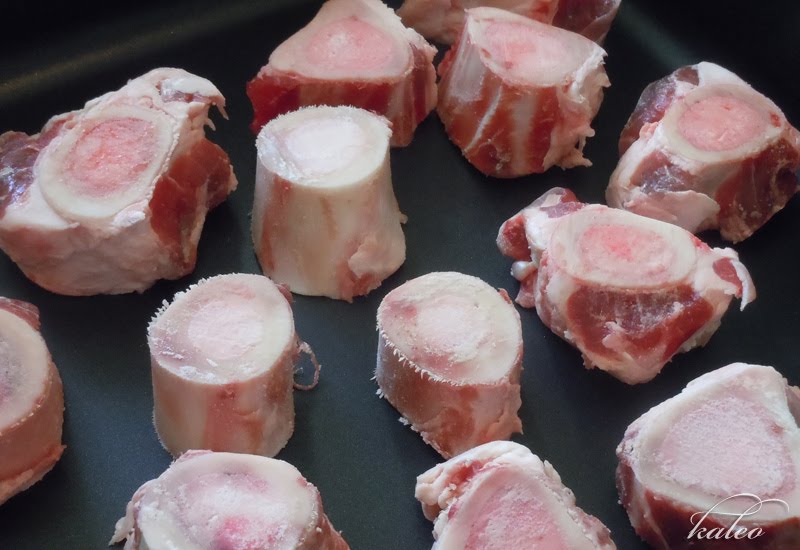
For me, getting the veal bones for the brown stock is challenge enough and once I make it, there is more than an abundant quantity for my personal use so this is truly a rare occurrence for me or any other home chef. Check with your local butcher for the availability of veal bones.

I begin by making the "brown stock", as this is also used to
make the espagnole (French for Spanish, although the sauce has little connection with Spanish cuisine). The brown begins with the roasting of the bones, veal bones have a higher degree of collagen than beef bones and adds more body in the form of gelatin to enrich the stock.

The bones are
roasted alone first to begin the break down process of the enzymes in the marrow for about an hour. The roasted bones are then coated with tomato paste and other vegetables (mirepoix) are added, carrots, onions and celery (some chefs omit celery as they claim the flavoring is too aggressive). The bones and mirepoix is then roasted for about another half an hour to help the tomato paste begins to aide the breakdown of cartilage and other connective tissue.

After further roasting the bones and mirepoix, transfer the bones from the roasting pan into a large stock pot. With the rest of the mirepoix in the roasting pan, add a little wine and water to deglaze the the pan, scraping up the brown bits (fond) on the bottom of the pan.

Add COLD wate
r to cover the bones in the stock pot. Cold water dissolves certain proteins (albumin) which helps clarify and keep the stock clearer. Now add the deglazed mirepoix and contents back to the stock pot with the bones. Add enough water to cover the entire contents about 8 quarts. To the stock add a Bouquet Garni, a bundle of herbs tied together with string, to add flavor and the string helps facilitate removing later. The Bouquet is usually made up of fresh bay leaves, rosemary, thyme and parsley. I bundled it up in a jacket of leeks.

Bring the mixture to a boil and lower temperature to a simmer. Now comes the reduction process, with the stock at low heat, simmer for 6 hours or more, I simmered the stock for 10 hours, frequently skimming the top of frothy scum as it rises. The longer you simmer the more intense the flavor and body. After a while the liquid will assume a nice deep dark color. The reduction process obviously removes liquid so be sure to keep the liquid level to 4 quarts.

After the simmer reduction, remove the bones (you can retain these for another round of simmering or a remouillage ). Strain the stock through a sieve or cheese cloth. Place the stock in a sink with cold water to reduce the heat to 70º after simmering to avoid the growth of bacteria. Now you're about ready to move onto the Espagnole, the other half of the Demi Glace.


Check back for Part Two, the Espagnole
____________________________________________

Tuesday, November 23, 2010

Chicken Katsu チキンカツ

Chicken Katsu is a variation of the popular Japanese Tonkatsu dish, which is a deep-fried pork cutlet. It's a form of Japanese comfort food that was invented in the late 19th century. It was originally considered a type of yōshoku—Japanese versions of European cuisine. I think it's a combination of the sauce and the japanese style bread crumbs, known as Panko flakes that makes this dish so tasty.

The bread crumbs are light and crunchy and makes a delightful crust when pan fried or deep fried.
In this dish I've substituted chicken breast cutlet for the pork cutlet or loin. The sauce that makes this dish is a thick, dark, fruity, intensely sweet and salty. It's made with the usual suspects, soy, vinegar, tomato, carrot and onion puree, corn starch, applesauce and of course, garlic. The cutlets are sliced to bite size and usually served over a bed of shredded cabbage with rice and sometimes with a pickled radish. This not exactly a low calorie dish, but like I said it is tasty and easy to make.


After a seasoning with salt and pepper, the chicken dredged in flour, then d
ipped in a egg and then into the panko flakes before hitting the pan. I simply use canola oil with a splash of sesame oil for a little flavor. Cook until a nice golden brown color is achieved remove from heat to drain on a paper towel over a pan. Let rest for a minute or two for the juice to reassert itself, slice across the grain and plate on a bed of sliced cabbage or lettuce. Serve with rice and vegetable side of you choice.


_______________________________________________


Chicken Corn Chowder


Hmmm hungry for a hearty bowl of chicken corn chowder? Fall is the perfect season to enjoy a bowl of hot creamy chicken corn chowder, and when I went to my local vegetable market, and saw the fresh corn on the cob, I knew exactly what was on the horizon.

I also happen to have some chicken that was needing a recipe to fill. So in a large heavy bottom pot, cook the bacon and keep the fat rendered, remove bacon for later. Add the onions, carrots, celery saute until tender then add the red and green peppers. season with chili powder, salt and pepper. Slowly add the chicken stock and deglaze, being careful to pick all the brown bit on the bottom of the pot. So much of the smokey flavor is picked during this process and makes the chowder so tasty.

Continue to add the stock and re-season with salt and pepper. Add the corn, thyme and Bay leaves and hot sauce. Let simmer for about hour.
Add the chicken, stir well and slowly add the half and half until rich and creamy. You can add a quick rue with two tablespoons of flour and two tablespoons of butter in a small sauce pan, cook thoroughly to remove floury taste and add to the the soup. Stirring constantly, bring the soup to a boil, then reduce heat and simmer for a few minutes, you can add some cheese if you like for even more creamy chowder at this point.

I got these wonderfully rustic sourdough bowl breads to pour the chowder into. Cut open the top and pullout the inside to create a bowl for the chowder. Sprinkle the chowder with the bacon bits and garnish with a little chopped parsley or scallions.

Ingredients:

  • 1 1/2 cups chicken cooked
  • 3- Ears corn on the cob
  • 3- Strips Bacon cut into one inch pieces
  • 2- Russet or Yukon Potatoes
  • 1- Red Pepper
  • 1- Green Pepper
  • 2- Stalks Celery
  • 2- Sticks of Carrots
  • 1- Vidalia Onion
  • 2- bay leaves
  • 1- teaspoon fresh thyme
  • 1- teaspoon Rock Salt
  • 1- teaspoon Coarse Black Pepper
  • 1- teaspoon chili powder
  • 1- Pint Half and Half
  • 3- Cups Chicken Stock/Broth
  • 1/2 teaspoon Hot Sauce
  • 2- Tablespoons Flour
  • 2- Tablespoons Butter
____________________________________________
Sweet Pepper Coulis Scallops


This is actually a very simple dish I had a craving for. The making of the sweet pepper coulis was a mission on it's own, but when it all came together it was a wonderfully delicious sweet tangy dish.

The Sweet Pepper Coulis is the hero of this dish and it takes a little time to make, so you might want to make this a day in advance. Seed a good size red bell pepper, be sure to remove ribs and cut into strips. Chop half an onion and three stalks of scallions. In a sauce pan add the oil and saute the onions, peppers until nicely wilted. Add garlic and season with salt and pepper, add chili powder. Add the cider and chicken stock along with the scallions, reduce heat and simmer until sauce is reduced by half about two hours. Strain the mixture through a fine sieve and discard the the solids. Simmer the sauce for another hour, in a small bowl or dish add the corn starch with equal parts water and mix. Add the corn starch to the sauce until sauce thickens.

The scallops are pretty straight forward, take the dry ingredients and and mix well. In a separate pan, add a touch of olive oil to the scallops and sprinkle with old bay and salt and pepper. Coat the scallops in flour mixture. Add oil and heat pan, when oil and pan reaches add scallops and sear on both sides careful not burn them. Place the scallops on plate and and spoon coulis over scallops, I made a wilted spinach salad topped with broccoli sprouts and bacon bits. Add a touch of balsamic reduction and enjoy...


Ingredients:


Sc
allops
  • 1lb Sea Scallops
  • 1/2 cup Flour
  • 1 tsp Old Bay
  • 1/2tsp Garlic Powder
  • 1/2tsp Pepper
  • 1/2tsp Kosher salt
  • Pinch Paprika
  • 1tsp Olive Oil
Sweet Pepper Cider Coulis
  • 1lrg Red Pepper
  • 1/2 Onion
  • 3 Stalks Scallion
  • 1/2 cup Apple Cider
  • 1/2 cup Chicken or veal stock
  • 1/4 cup white wine
  • 2 tblsp Sweet Chili sauce
  • 1 tblsp Hot Sauce
  • 1 tsp Chili Powder
  • 2 cloves Garlic chopped
  • 1 tsp Coarse Black Pepper
  • 1 tblsp Corn Starch
____________________________________________

Sunday, September 5, 2010

Asian Fusion, Lo mein, Bulgogi, Sweet and Spicy Shrimp

A lot of Asian food share similar qualities, and yet still remain distinctive to their native origin. The again, who's to say who originated what? So why not just mix them up a bit to create a fusion dinner. Which is just what I did here, and on many other occasions.
_____________________________________________________
Lo mein

Lo mein is a pretty traditional Chinese dish w
hich I eaten all my life. It's basically a noodle dish that contains vegetables and some kind meat, fish or poultry. The term lo mein comes from the Cantonese lōu mihn (撈麵), meaning stirred noodles. It has over time been Americanized, and people expect to have a soft noodle that's been stir fried in wok with a brown sauce with an assortment of vegetables like carrots, onions, scallions, snow peas, bean sprouts, bok choy and others. The dish is defined by it's main meat component such as roast pork (Char Siu), chicken, beef, shrimp, lobster and any combination thereof. The dish could be considered a meal in itself, but when I was growing up, it was considered a side dish.
_________________________________________
Bulgogi


Beef Bulgogi is a
very popular Korean meat dish. The thinly sliced sirloin is marinated with a mixture of soy sauce, sugar, sesame oil, garlic and other ingredients. Bulgogi is traditionally grilled, but pan-cooking is also common practice. This is sort of Korean style teriyaki, where the sweet salty marinade is used to infuse the meat with a distinctive flavor. Bulgogi literally means "fire meat" in Korean, which refers to the cooking technique—over an open flame—rather than the dish's spiciness. I pan cooked my Bulgogi and added firm tofu, onions and scallions for a bit of color. You can add other vegetables to the process like sweet red bell peppers, zucchini, squash, mushrooms etc. I kept my version fairly simple. You can make your own sauce and marinate overnight, or if you're lucky, you have a Korean market nearby that's got it all ready for you.
_____________________________________________________
Hot & Spicy Shrimp

Who's to say where this dish originated and how to prepare it is as equally diverse. There are Hunan versions, Sze
chuan versions, Thai versions and so on. This one is my own interpretation, using a chili sesame oil and canola oil. This really simple dish to prepare and the results are well rewarding. The trick is to be careful how hot you make it. A common method for making Chinese style (Szechuan) spciy shrimp uses a technique called "velveting" where the shrimp is submerged into hot oil for a moment or two before going into the wok to be stir fried. I added sweet red and green bell peppers and onions.

_________________________________________

Thursday, August 26, 2010

Kiwi Coolada


Warning, do not try this at home unless you are very hot and thirsty and dying for something cool, fruity and refreshing.

This could very well be the best Hot Summer Day fruit drink I have ever ingested. It makes perfect sens
e, with all the trimmings of a Pina Colada with the addition of the tangy Kiwi fruit makes for an extraordinary thirst quencher. Use fresh pineapple whenever possible, but any will do even from a can (Dole brand of course). Add a little cream of coconut, a few good shots of Midori and Bacardi Dark Rum, some ice into the blender...

You're gonna be licking the blender for more... so make plenty...

_______________________________________________